
Frieze LA, Edited
My booth priorities, the satellite fairs I’m actually making time for, and how to plan LA without donating your will to live to traffic.

Frieze week moves fast—LA does not. And it’s a lot: a lot of looking, a lot of people, a lot of logistics. This guide is my edit: booths I’m excited to see (with quick reasons), and the satellite fairs worth your time. A quick note: In an effort to not overwhelm you, I’m publishing my exhibition recommendations as a special edition of The Art Edit so you can plan by neighborhood and actually enjoy yourself. Pair this guide with that list and you’ll be unstoppable (and only mildly stressed).
My best advice: plan your non-Frieze activities around the day(s) you’re not going to Frieze. LA is sprawling, and you do not want to spend your entire afternoon donating your will to live to traffic.
If you’re going to Frieze on Friday, for example, keep the rest of your day on the Westside—Santa Monica, Venice, Beverly Hills. You can also double up if you’re strategic: Frieze + Post-Fair is doable on the same day, or Frieze + The Other Art Fair if you’re feeling adventurous. On your non-Frieze day, Felix and ENZO can comfortably live together. Also not to be missed is the Los Angeles debut of the BUTTER Fine Art Fair near the So-Fi stadium in Inglewood. But whatever you decide, leave room for at least one non-fair day—because the best looking tends to happen outside the fair tents.
Solo presentations I’m not missing
Ebony G. Patterson — moniquemeloche (Booth A26)
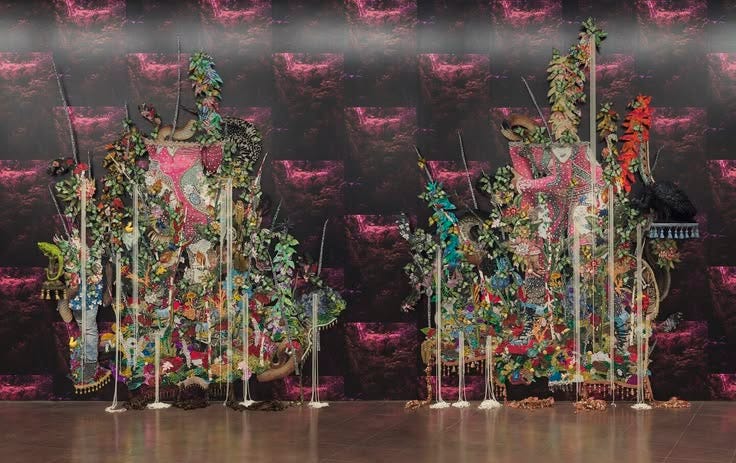
Why I want to see it: Patterson’s work is lush and devastating at the same time—seduction as an entry point, and then the real subject hits: visibility, grief, violence, care, and what gets aestheticized to survive. I want to be with the work in person, where the detail density and surface intelligence actually do what reproductions can’t.
Sergio Miguel — Company (Booth F13)
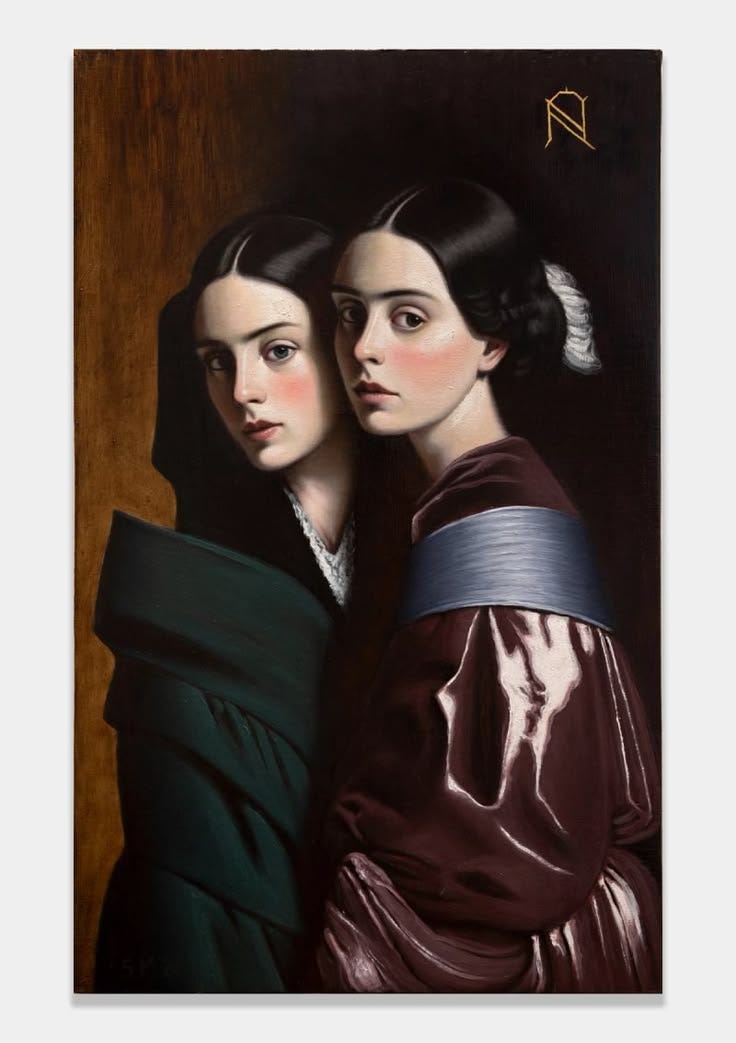
Why I want to see it: Tercio de Muerte pulls from 17th–18th century painting traditions and religious iconography to sharpen a contemporary critique of Spanish colonial legacies—history as aesthetic language, not backdrop. I’m interested in how Miguel uses oil painting’s “authority” to stage questions of personhood, spectacle, and desire—and what the work does up close, where meticulous rendering becomes its own kind of argument.
Jordan Ann Craig — Hales (Booth B17)
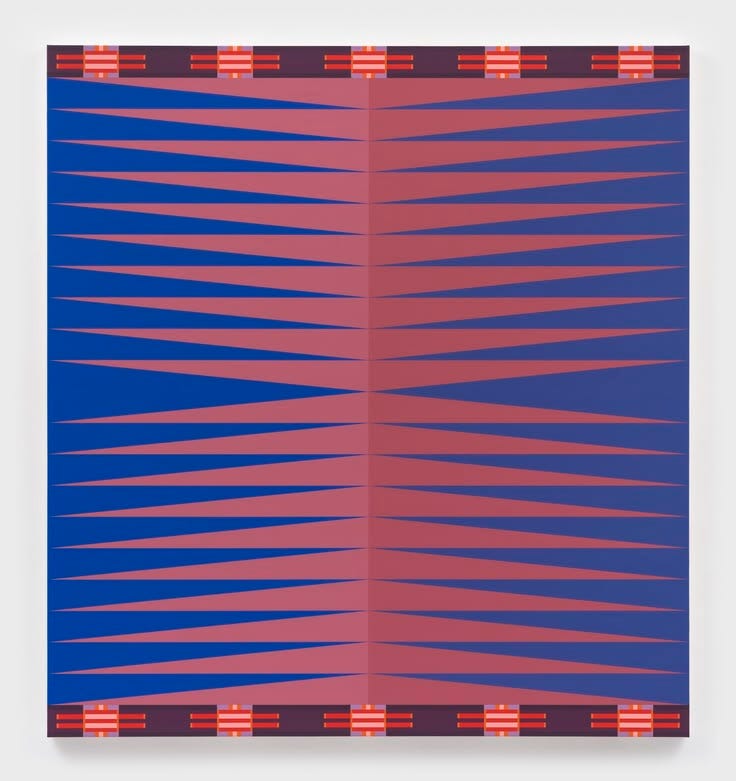
Why I want to see it: Craig’s work holds pattern and presence in a way that feels intentional—not decorative—especially when you read it through Indigenous lineage and ongoing contemporary life. I’m watching how she builds a visual language that can carry inheritance and insist on the now, without flattening either.
Alicja Kwade — 303 Gallery (Booth B20)
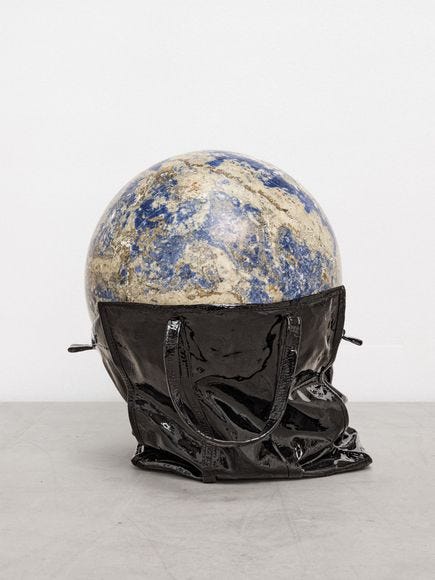
Why I want to see it: Kwade makes philosophy feel like an object lesson—space, time, and perception turned into something you can walk around. I’m going to see how the piece behaves in real life: scale, material presence, and that subtle disorientation you can’t get on a screen.
Marley Freeman — Parker Gallery (Booth A20)
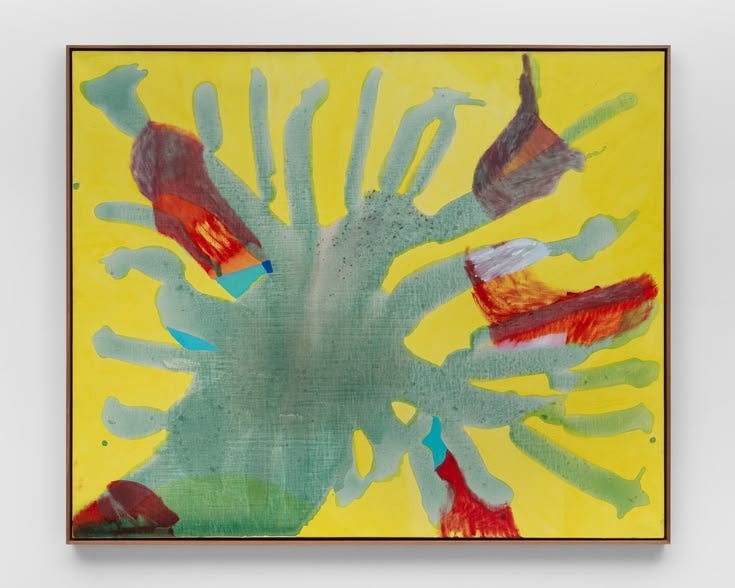
Why I want to see it: Freeman’s work has a quiet tension—formal control that still leaves room for feeling and uncertainty. I’m interested in the booth encounter: how the work holds space, how it reads up close, and what it does to your pace when everything around you is trying to be “loud.”
Gallery presentations I’m prioritizing
Sprüth Magers (Booth C6)
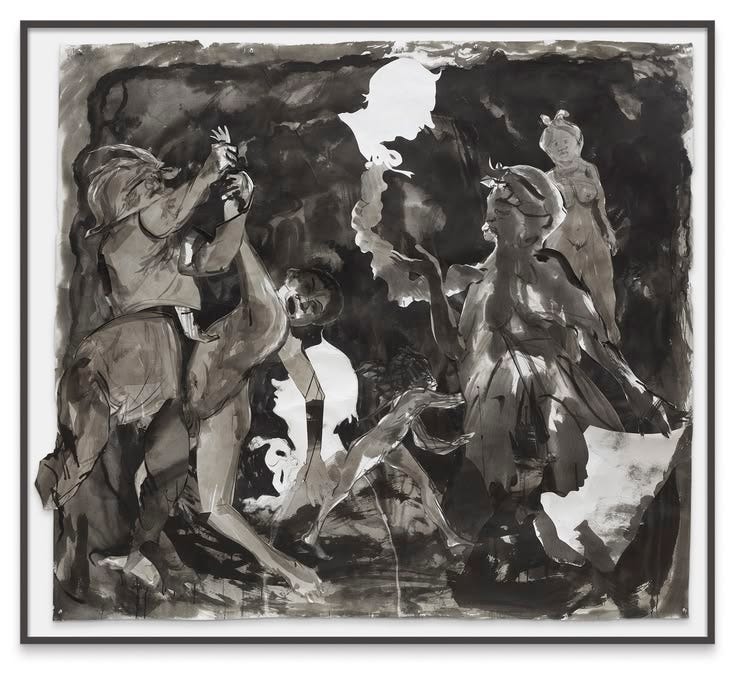
Why I want to see it: Must-see—especially for Kara Walker and Arthur Jafa. The presentation includes Henni Alftan, Kenneth Anger, John Baldessari, George Condo, Lucy Dodd, Nancy Holt, Jenny Holzer, Anne Imhof, Karen Kilimnik, Barbara Kruger, Gala Porras-Kim, Sterling Ruby, Analia Saban, David Salle, Martine Syms, Kaari Upson, and Walker—an iconic lineup that can either become chaos or, if they pace it right, a really sharp conversation about images and power.
Marc Selwyn Fine Art (Booth D1)
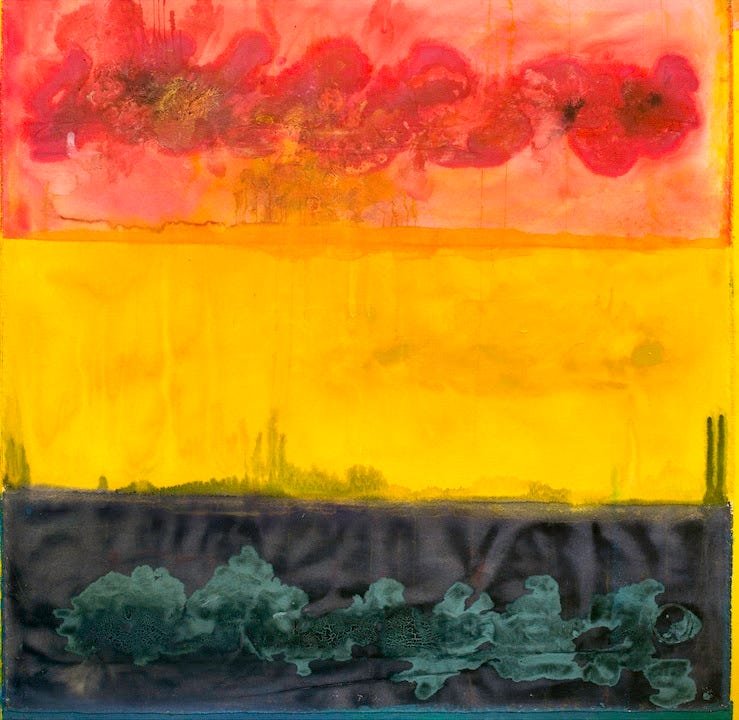
Why I want to see it: A strong, historically literate mix—Rodolfo Abularach, Mel Bochner, Lee Bontecou, Frank Bowling, Akinsanya Kambon, Sherrie Levine, Robert Mangold, Richard Misrach, Kristen Morgin, Lee Mullican, Ramsés Noriega, Raymond Pettibon, Ed Ruscha, Michelle Stuart, Cynthia Talmadge, Joey Terrill, Michelle Uckotte. I’m especially looking forward to seeing Bowling and Terrill in that context—two very different practices that both reward time, not drive-by looking.
Roberts Projects (Booth A2)
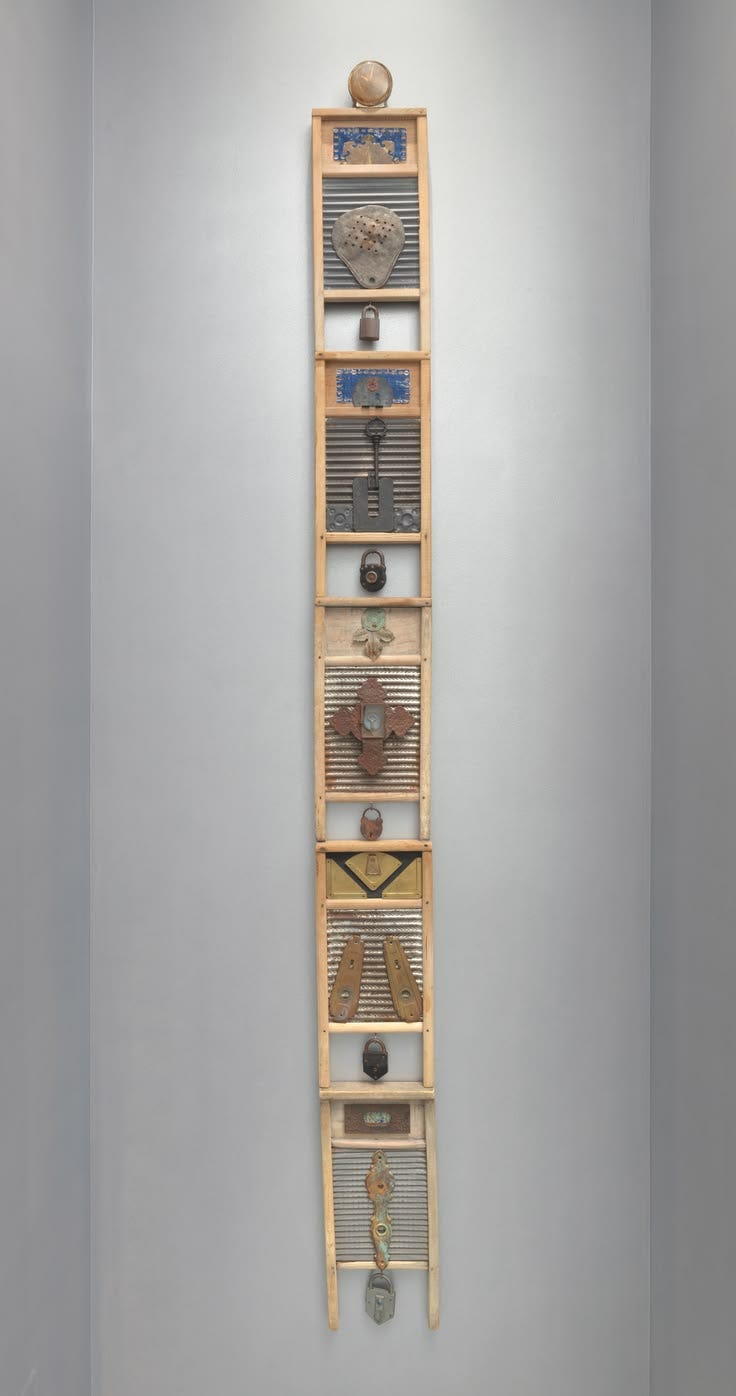
Why I want to see it: A genuinely stacked presentation: Luke Agada, Amoako Boafo, Daniel Crews-Chubb, Aaron Glasson, Suchitra Mattai, Mia Middleton, Collins Obijiaku, Wendy Red Star, Betye Saar, Kehinde Wiley. I’m interested in how they choreograph new, recent, and historical work without leaning towards chaos.
David Zwirner (Booth D03)
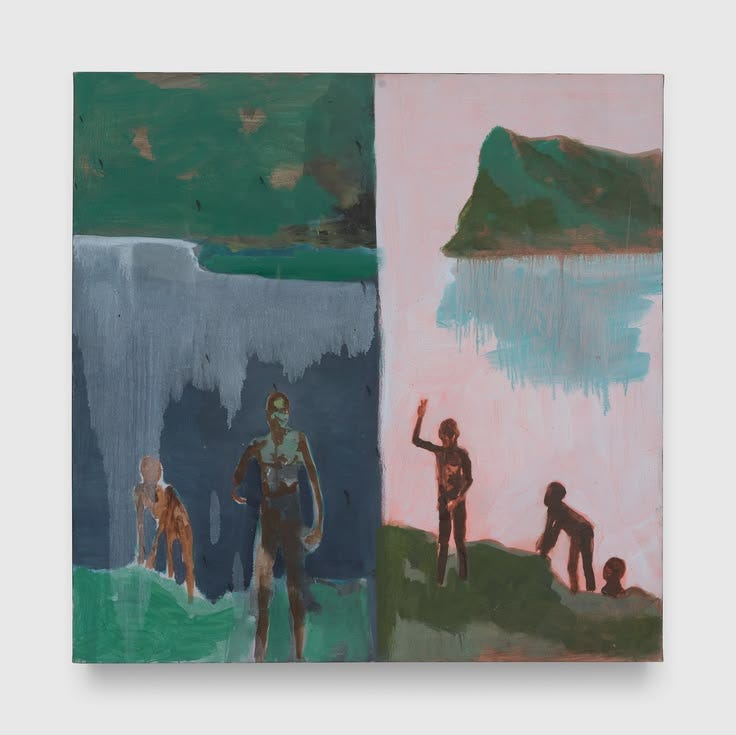
Why I want to see it: Zwirner booths are always staged well. I’m especially excited to see Noah Davis, Njideka Akunyili Crosby, and Roy DeCarava—three very different practices, each with real gravity. The full lineup includes Philip-Lorca diCorcia, Louis Fratino, Martin Kippenberger, Emma McIntyre, Raymond Pettibon, Walter Price, Steven Shearer, Wolfgang Tillmans, and Lisa Yuskavage—so I’m looking forward to seeing how they pace the booth and what conversations they’re building across generations and mediums.
David Kordansky (Booth B02)
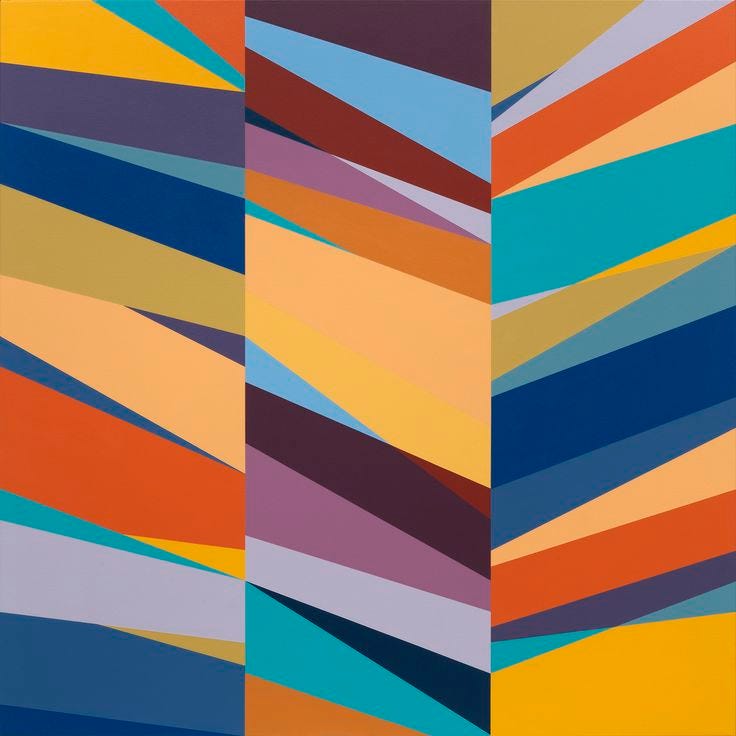
Why I want to see it: This is a deep roster booth—Matthew Brannon, Jared Buckhiester, Andrea Büttner, Martha Diamond, Sayre Gomez, Ron Gorchov, Guan Xiao, Raul Guerrero, Jennifer Guidi, Chase Hall, Lauren Halsey, Evan Holloway, Shara Hughes, Doyle Lane, Tala Madani, Chris Martin, Sam McKinniss, Ivan Morley, Ruby Neri, Odili Donald Odita, Maia Cruz Palileo, Hilary Pecis, Adam Pendleton, Ricky Swallow, Tom of Finland, Richard Tuttle, Tristan Unrau, Mary Weatherford, Michael Williams, Jonas Wood, and Betty Woodman. Even as a group presentation, it’s a strong read on how the gallery balances LA energy with broader art-historical range.
Vielmetter Los Angeles (Booth B23)
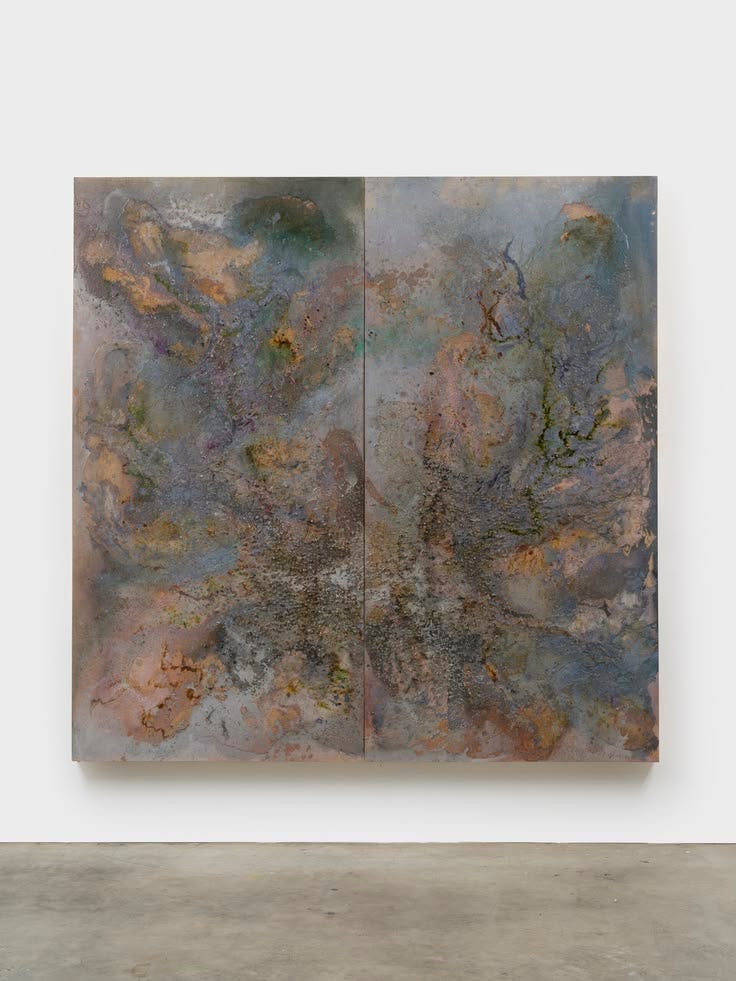
Why I want to see it: I’m especially coming for Tonia Calderon—her large-scale abstractions build tension between natural and synthetic materials, and I’m curious how that fragility reads in person (light, surface, chemistry). Alec Egan brings a different kind of LA intelligence—image-making that can feel casual at first glance but gets sharper the longer you sit with it. And Shanna Waddell’s world-building project (s/heness society) adds a feminist ethics-of-care framework where beauty isn’t decoration—it’s propulsion.
Nicodim (Booth D16)
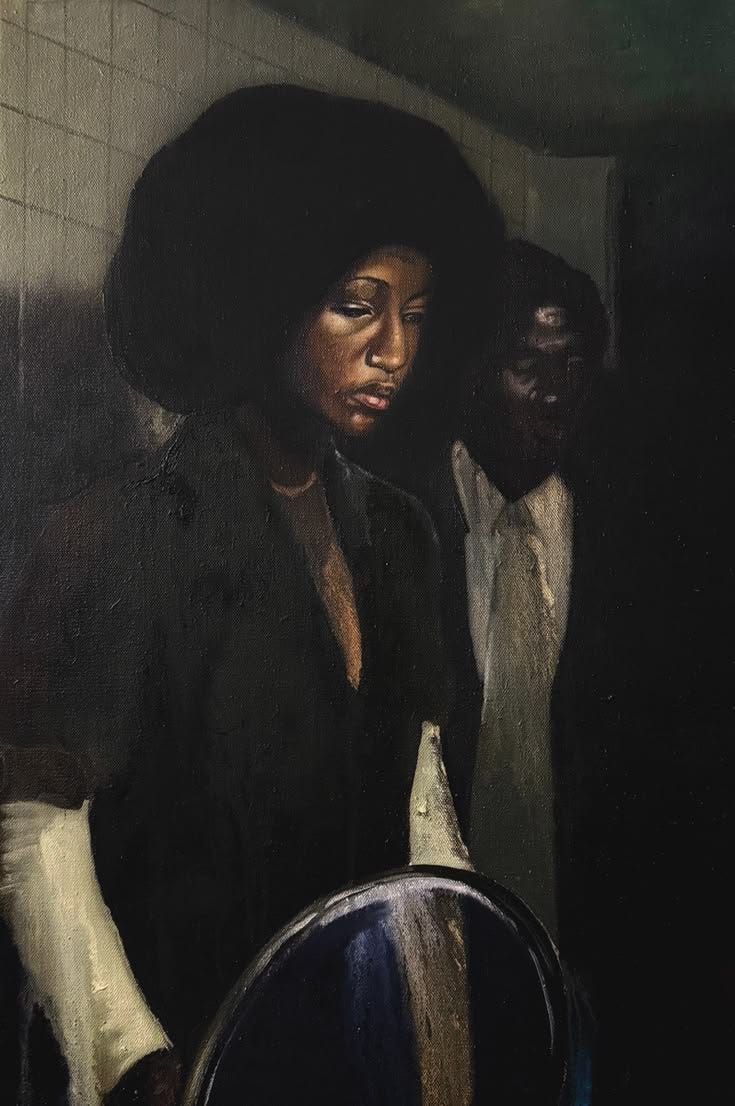
Why I want to see it: I’m especially excited to see Devin B. Johnson, whose paintings slip between figuration and abstraction through freestyle digital collage—an allegory, for him, of community identity (entropy and regeneration). With Isabelle Albuquerque and Nicola Samorì rounding out the presentation, I’m looking forward to seeing the works in conversation.
Alexander Gray Associates (Booth B5)
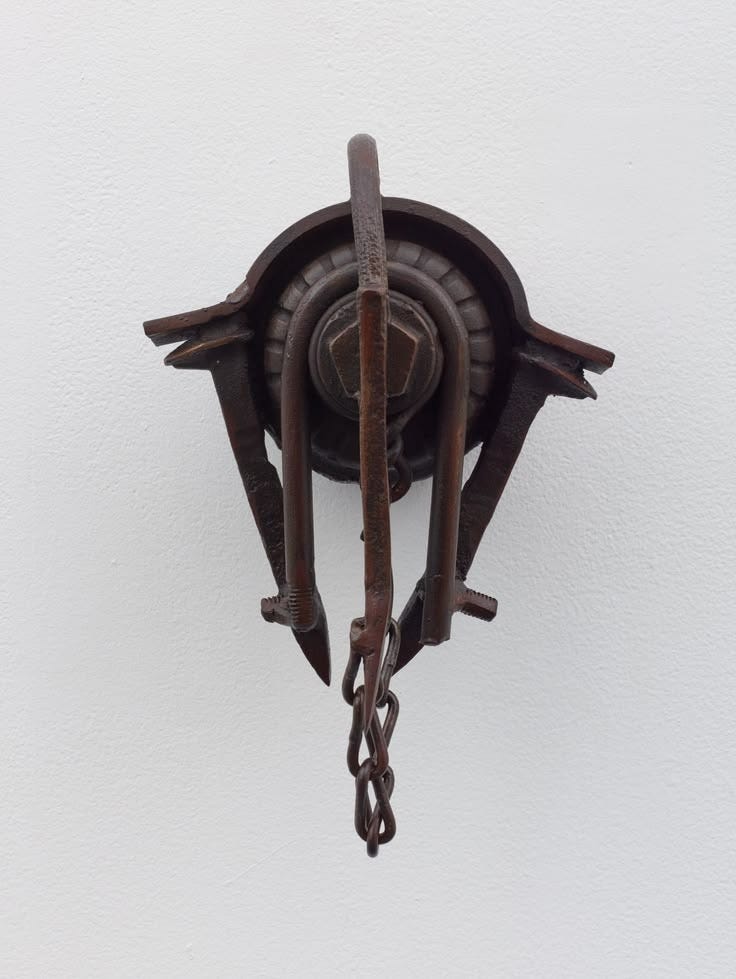
Why I want to see it: I’m there for Melvin Edwards—welded steel sculptures and works on paper that distill compression, tension, and release into physical form. This presentation includes rare 1960s work, including Inside and Out (1963–64) from his Lynch Fragments series, made in Los Angeles more than 60 years ago.
Southern Guild (Booth A12)
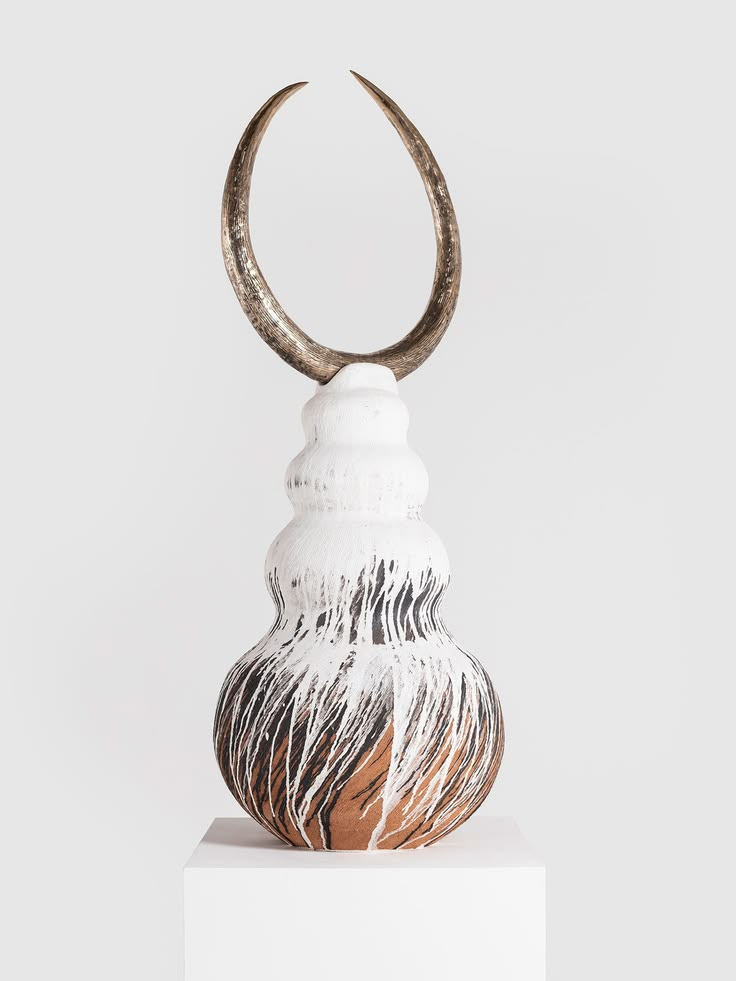
Why I want to see it: This fair is landing on the heels of them moving their LA location to Tribeca, so it’s bittersweet for me. Still, their presentations tend to have real conviction—material experimentation and a point of view, not just a polite sample platter. Featured artists include: Shane Keisuke Berkery, Kamyar Bineshtarigh, Sandra Brewster, Chloe Chiasson, Ange Dakouo, Jozua Gerrard, Bonolo Kavula, Manyaku Mashilo, Gus Monday, Zanele Muholi, Mmangaliso Nzuza, Zizipho Poswa, Marcus Leslie Singleton, Jasmine Thomas-Girvan, Chidy Wayne.
Pace (Booth C09)
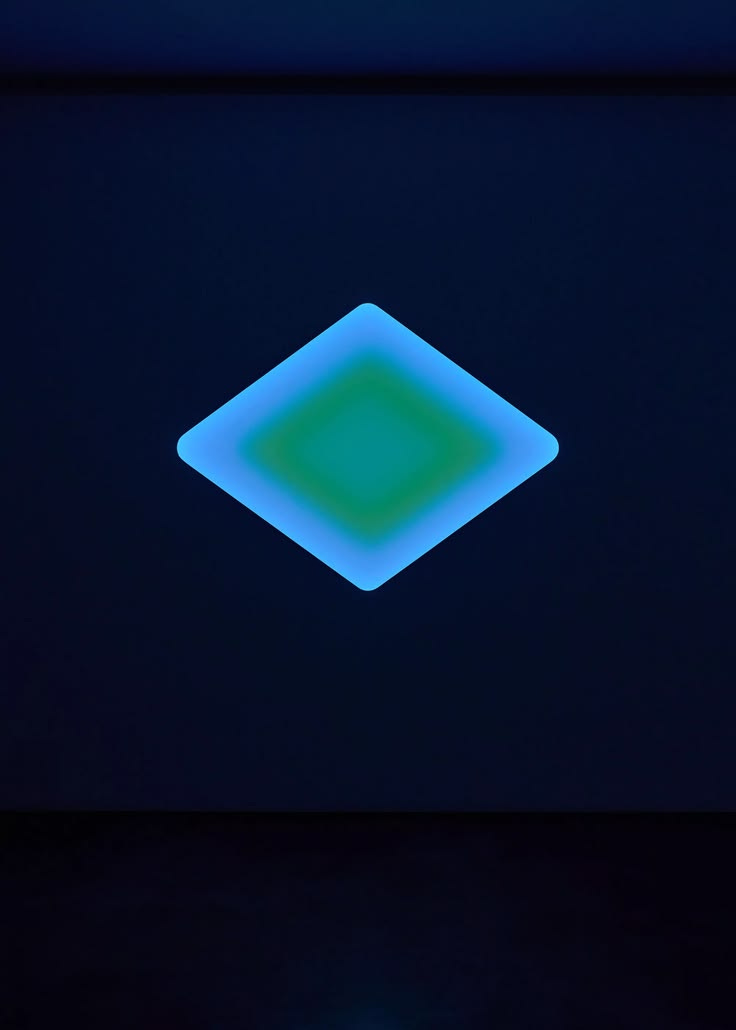
Why I want to see it: Pace is leaning hard into LA this year—James Turrell (a never-before-seen rounded-diamond installation), new work by Mary Corse and Friedrich Kunath, photographs by Richard Misrach, plus works on paper by David Lynch and a David Hockney work on paper. The booth also folds in Light & Space lineage (Peter Alexander) alongside a deep bench across generations—Lynda Benglis, Louise Nevelson, Emily Kam Kngwarray, Jean Dubuffet, Kenneth Noland, Richard Pousette-Dart—and contemporary program notes (Robert Longo, Kohei Nawa, Mika Tajima, and others). I’m especially curious how they pace this many histories in one booth without it turning into a greatest-hits wall..
Lisson Gallery
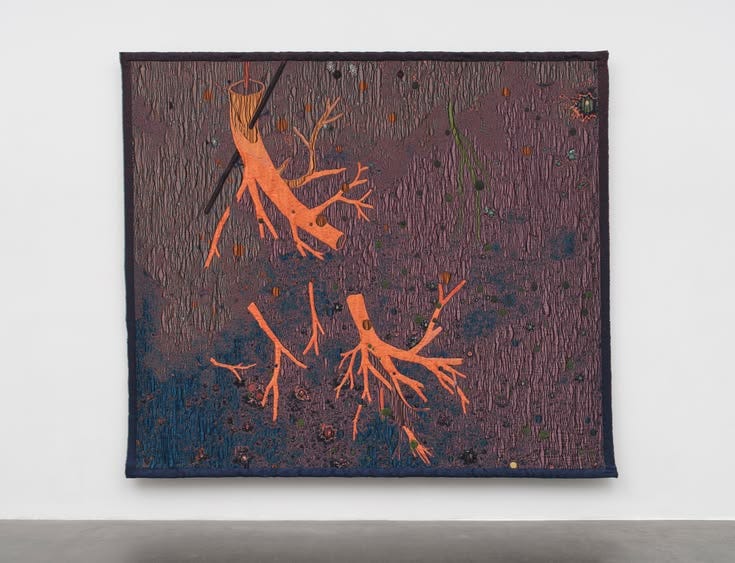
Why I want to see it: Otobong Nkanga and Hugh Hayden are my anchors here. Nkanga’s work traces entanglements of land, labor, and extraction with real material intelligence, and Hayden has a sharp way of reconfiguring familiar objects until they start speaking back—culture, nature, construction, all collapsed into one form. The booth is a strong roster across mediums—Kelly Akashi, Olga de Amaral, Anish Kapoor, Nkanga, Rodney Graham, Hiroshi Sugimoto, Garrett Bradley, Ryan Gander, Hayden, Channa Horwitz, Oliver Lee Jackson, Hélio Oiticica, Dalton Paula, Spencer Finch, among others—so I’m expecting a presentation that rewards more than a drive-by glance. If you want two works to look for: Nkanga’s Cadence – Broken (2025) and Hayden’s Mariners Baseball Cap (2025).
Frieze extras worth building into your day: public projects + emerging voices
‘Body & Soul’ (Art Production Fund at Frieze LA)
If you need a reset from booth fatigue, this is it. Frieze’s 2026 program of artist projects includes installations by Kohshin Finley, Shana Hoehn, Amanda Ross-Ho, and Kelly Wall—free, public-facing work that breaks the spell of the fair tent and reminds you you’re in LA, not a convention center.
Focus: A platform for new artistic voices (curated by Essence Harden)
Frieze’s Focus section is where you go to see what’s forming, not just what’s already certified. Essence Harden returns for a third year to oversee bold solo presentations from 15 US-based galleries operating for 12 years or less—including Bel Ami, Company Gallery, Dreamsong, Fernberger, Lyles & King, Make Room, Ochi, Patron, Sea View, and Hannah Traore Gallery.
Satellite fairs worth your time (aka: where the discoveries hide)
Post-Fair (Santa Monica)
If you’re doing Frieze, this is the cleanest same-day add-on. Post-Fair is a low-cost, alternative three-day art fair that seeks to simplify the art fair experience by focusing on solo presentations in an iconic venue with a relatively low impact. It’s tightly curated, digestible, and close enough to Frieze that you’re not turning your day into a cross-city commute.
The Other Art Fair (Culver City)
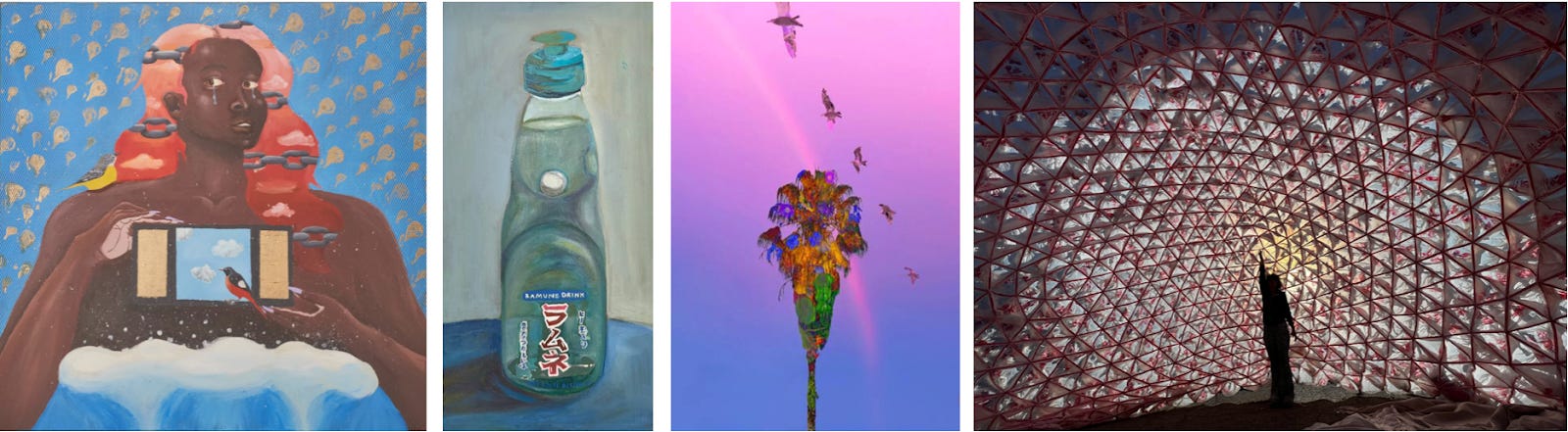
This is their largest LA edition yet with 160 independent artists, and they’re moving to a new Culver City venue at 3Labs (Warner Drive). This year also has real local stakes very close to my heart: in recognition of the one-year anniversary of the Eaton Fire, they’re partnering with Altadena Brick by Brick to support rebuilding efforts through The Art of Ping Pong: Play it Forward—artist-designed ping-pong tables that function as sculptural works, with donations going directly to rebuilding (and some premium tickets include take-home artist-designed paddles).
Curatorially, I’m especially watching two moments: Marie-José as the Winter 2026 New Futures Award recipient (Afro-surrealist work exploring the Black femme experience across painting, collage, stained glass, and textiles), and a special section curated by Dominique Clayton honoring Betye Saar’s 100th birthday—Longevity and Love: A Tribute to Betye, Blackness, and Brilliance—featuring recent work by Kayla B. Miller and Delaney George. Clayton is also curating select work by Myke Wright (limited edition prints + collectibles).
Beyond the booths, there are a few genuinely fun immersive moments: Linus Gruszewski’s Thank You, a monumental walk-through installation made from 1,500 repurposed take-out bags; The Goodbye Line, an interactive telephone booth where visitors can leave anonymous voicemails—goodbyes they never got to say; and The Faux-To Booth, where artists draw portraits in real time (no automated photo strip, no mercy).
Felix Art Fair (Hollywood)
A quick hit, not an anchor. Go for the hotel-room format, the looseness, and the fact that you can see a lot without making it a full-day production.
BUTTER Fine Art Fair (Inglewood / Hollywood Park, near SoFi Stadium)
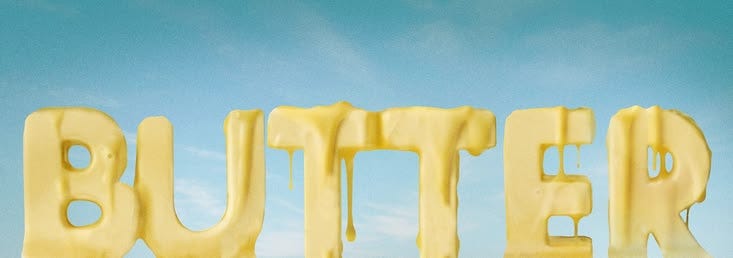
BUTTER is making its Los Angeles debut with an immersive four-day fair centered on care for artists of the African diaspora—and it’s LA’s only no-commission Black fine art fair, meaning 100% of sales go directly to the artists. Co-founded by Malina Simone Bacon and Alan K. Bacon, Jr. (GANGGANG), it’s positioned as a model for economic justice and a genuinely strong fair to attend during Frieze week. Artists include April Bey, Autumn Breon, Micaiah Carter, Mr. Wash, Tumi Adeleye, Amai Rawles Jr., and Samuel Levi Jones, among others.
ENZO (Echo Park)
This is ENZO’s inaugural year: a new boutique fair timed with Frieze and Felix. It brings nine galleries from New York’s Chinatown and the Lower East Side into dialogue with LA’s cultural landscape, built on a free-to-visit model that emphasizes equity and access for both galleries and visitors. I think it’s worth a look especially if you want emerging-gallery energy and a different ecosystem than the main tents.
Final Note
Frieze week will try to convince you that more is more. It isn’t—especially in LA. Pick your priorities, build your days around geography, and leave space for exhibitions (see: the Art Edit special edition), where the looking gets quieter and the city starts to show off.
Go see Zenobia at Sea View! 🙏🏽
This is golden!!